Flood, Drain, Repeat: The Rise of the Automated Siphon
Flood, Drain, Repeat: The Rise of the Automated Siphon
As aquaponics continues to gain widespread appeal, the reliability of its core components becomes increasingly vital. At the heart of an effective ebb and flow system lies the bell siphon—a deceptively simple device that demands precise design. In this article, we explore how a well-engineered 😎 bell siphon, enhanced by sensor-driven automation, can form the foundation of a truly robust and responsive aquaponics system.
What is aquaponics - Murray explains
🌿 Introduction
Aquaponics—a sustainable fusion of aquaculture and hydroponics—is rapidly gaining traction among hobbyists, urban farmers, and commercial growers alike. Central to many aquaponics designs, particularly the popular flood-and-drain (ebb and flow) system, is a simple yet ingenious component: the bell siphon. Though modest in appearance, the bell siphon plays a critical role in maintaining healthy plant roots, oxygenating grow media, and supporting the biological processes that power an aquaponics ecosystem.
In this blog, we delve into the purpose, mechanics, and design principles of bell siphons, explore common pitfalls, and demonstrate how integrating sensor-based automation can elevate your system’s performance and reliability. Whether you're building your first system or refining an existing one, understanding the bell siphon is key to cultivating a thriving aquaponics setup.
🌱 Why bell siphons?
This is where bell siphons come into play.
- 💧 Oxygenation of roots: Continuous flooding can suffocate plant roots. Bell siphons enable complete drainage after flooding, ensuring roots receive both water and oxygen.
- 🔄 Automation without electricity: Unlike pumps on timers or electric valves, bell siphons are passive devices. They rely on gravity and water pressure—making them mechanical, reliable, and energy-efficient. Here we do discuss how we can marry automation to the bell siphons to extract even more of an efficiency. But to start with even stand alone siphons are quite useful.
- 🦠 Promotes microbial health: The flood-and-drain cycle supports beneficial bacteria that break down fish waste into nutrients plants can absorb.
- 🛠️ Simple yet effective: Once tuned properly, bell siphons maintain a consistent cycle—flooding the bed and then flushing it quickly, creating a rhythmic, low-maintenance system.
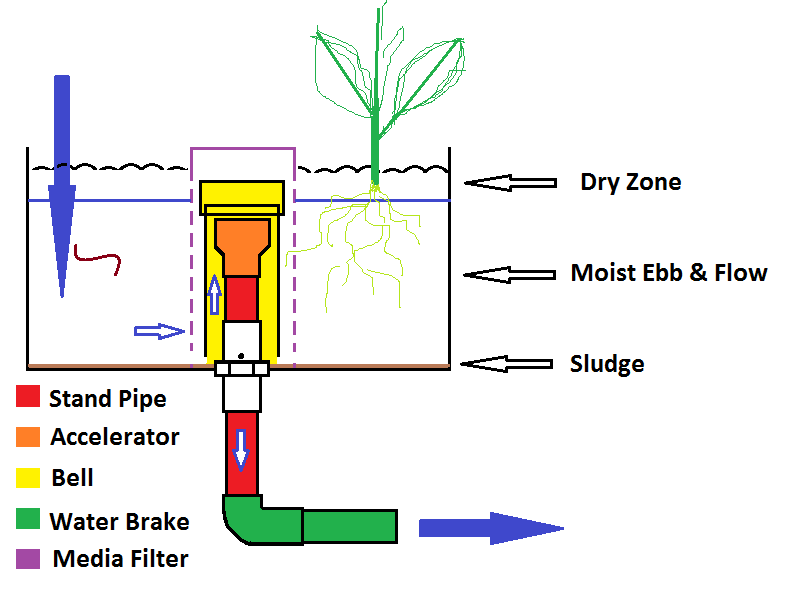
🔔 What Is a Bell Siphon?
A bell siphon is a clever plumbing device that automatically drains a grow bed once the water reaches a certain height. It operates based on the principle of siphoning—where water is drawn from one level to a lower one using gravity and atmospheric pressure.
Basic components:
- Standpipe – A vertical pipe inside the grow bed that determines the maximum water level.
- Bell cover – A larger pipe (the "bell") that fits over the standpipe and creates an airtight chamber.
- Gravel guard/media guard – A slotted or perforated pipe that surrounds the siphon to prevent growing media (e.g., clay pellets or gravel) from clogging the mechanism.
Bell siphon demonstration
Simplified working:
- As the grow bed fills with water, it rises around the standpipe.
- Once the water level reaches the top of the standpipe and overflows, the bell siphon creates suction (vacuum).
- This triggers a rapid drain of the grow bed—faster than a normal trickle or overflow.
- When the water level drops low enough to allow air into the bell, the siphon breaks and stops draining.
- The bed then begins filling again, and the cycle repeats.
This automatic on/off draining cycle is crucial for aquaponics systems to balance hydration and aeration without constant human intervention.
Bell siphon working principle
🧩 Bell Siphon Design Considerations
Designing a bell siphon is both an art and a science. Get the details right, and your system will hum along without a hitch. Get them wrong, and you’ll face issues like incomplete draining or no siphon activation at all.
Here’s what you need to consider:
-
Grow Bed Size & Flow Rate
- The volume of your grow bed affects how fast it fills and drains.
- Your pump’s flow rate must match the size of the siphon. Too fast, and the siphon may not break. Too slow, and it may not start.
- A good rule of thumb: your siphon should complete a flood-and-drain cycle every 20–30 minutes.
-
Siphon Dimensions
- Standpipe height sets the water level in the grow bed.
- The bell diameter should be about 1.5 to 2 times the standpipe’s diameter to create the right suction.
- The outlet pipe (at the bottom) should include a gentle slope and avoid too many bends to reduce flow resistance.
-
Air Break (Snorkel or Breather Tube)
- Adding a small breather tube or notch in the bell cover can help break the siphon more reliably by allowing air to enter at the right time.
📐 Bell Siphon Design Calculations
Let's walk through a practical example to design your bell siphon system!
1️⃣ Determine Grow Bed Volume
Given parameters:
- 📏 Length = 100 cm
- 📐 Width = 50 cm
- 🌊 Media depth = 30 cm
- 💧 Flood height = 25 cm
2️⃣ Target Fill/Drain Cycle Time
For optimal plant health, aim for a complete cycle every 20–30 minutes:
- ⏱️ 10 minutes to fill
- ⚡ 1–2 minutes to drain
3️⃣ Pump Flow Rate Required
To flood 125 liters in 10 minutes:
✅ Recommendation: Choose a pump rated at 750–1000 L/hr to account for head loss and system bypass.
4️⃣ Standpipe Size Reference
The standpipe diameter determines drain speed once the siphon activates:
💡 For our example: A ¾ inch (20mm) standpipe is ideal for the 750 L/hr pump!
⚙️ Automating Pump Flow for Moisture Control in Aquaponics
While bell siphons regulate the flood-and-drain cycle effectively, controlling how much and how often water is introduced adds another layer of optimization—especially if you're dealing with sensitive plants or varying environmental conditions.
🌡️ Why Automate Pump Flow?
- Prevent over-saturation during rainy or high-humidity days (especially in greenhouse setups).
- Conserve energy by avoiding unnecessary pumping cycles.
- Adapt to plant growth stages (seedlings need more moisture; mature plants need less).
- Fine-tune cycles beyond fixed timers—responding to real-time feedback from the system.
🛠️ Ways to Automate Pump Flow
- Moisture Sensor-Based Control
Use soil/moisture sensors placed in the grow media to monitor water content.- When moisture drops below a set threshold, a micro controller (like Arduino or Raspberry Pi) activates the pump.
- Once sufficient moisture is restored, the pump shuts off—allowing the siphon cycle to complete.
- Benefits: Reactive, dynamic control. Especially useful in hybrid systems where plant types vary.
- Time-Based Automation with Smart Timers
Install a programmable timer to control pump run time (e.g., run for 10 mins every 30 minutes).- Smart timers can be Wi-Fi enabled and connected to weather data.
- Can be integrated with IFTTT or home automation systems (e.g., Home Assistant).
- Flow Sensor + Feedback Loop
A flow rate sensor can be used to:- Monitor if the pump is delivering the expected flow
- Trigger alerts or shutoffs if blockages or dry-run conditions are detected
This is useful for fail-safe automation—especially for larger or commercial systems.
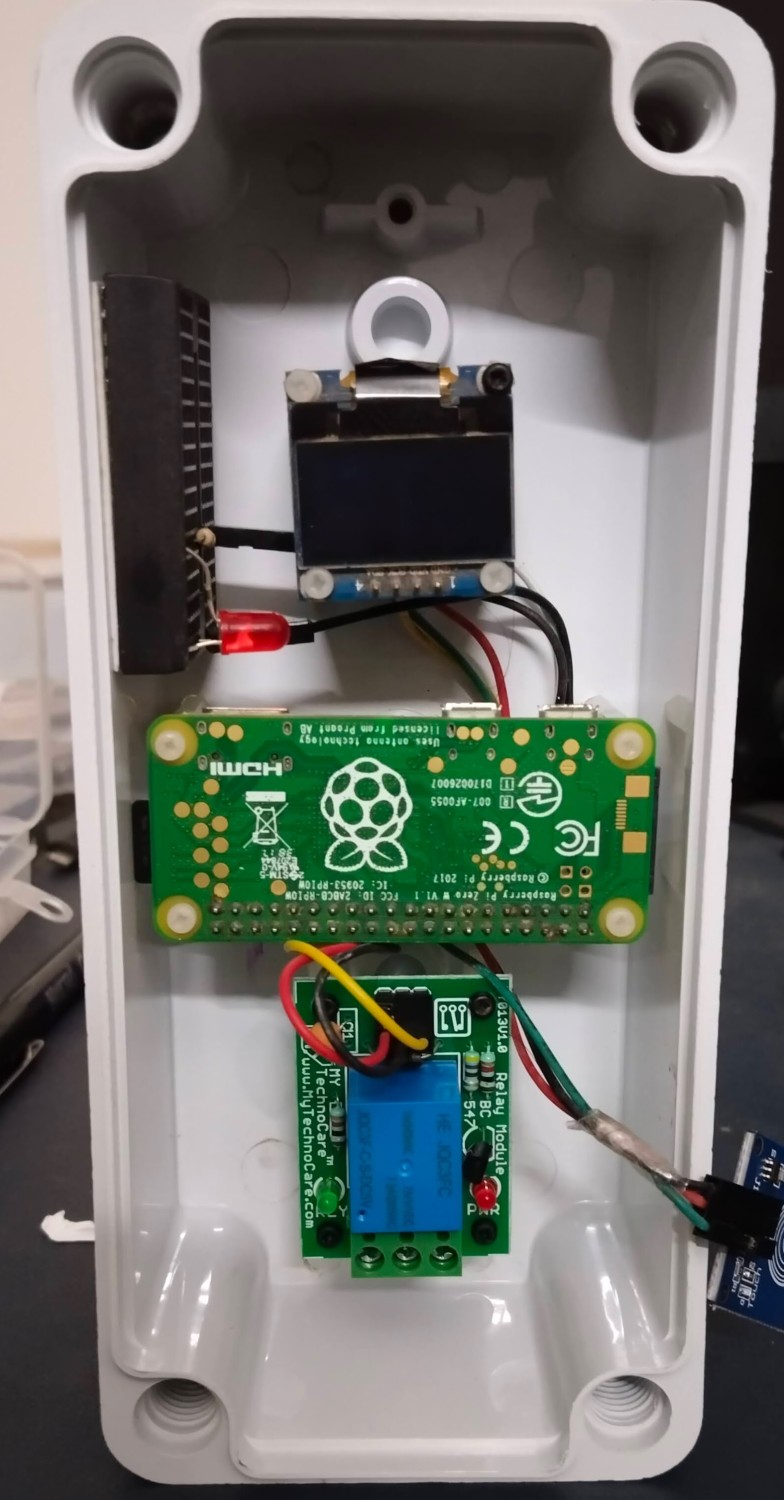
My Aquaponics Journey
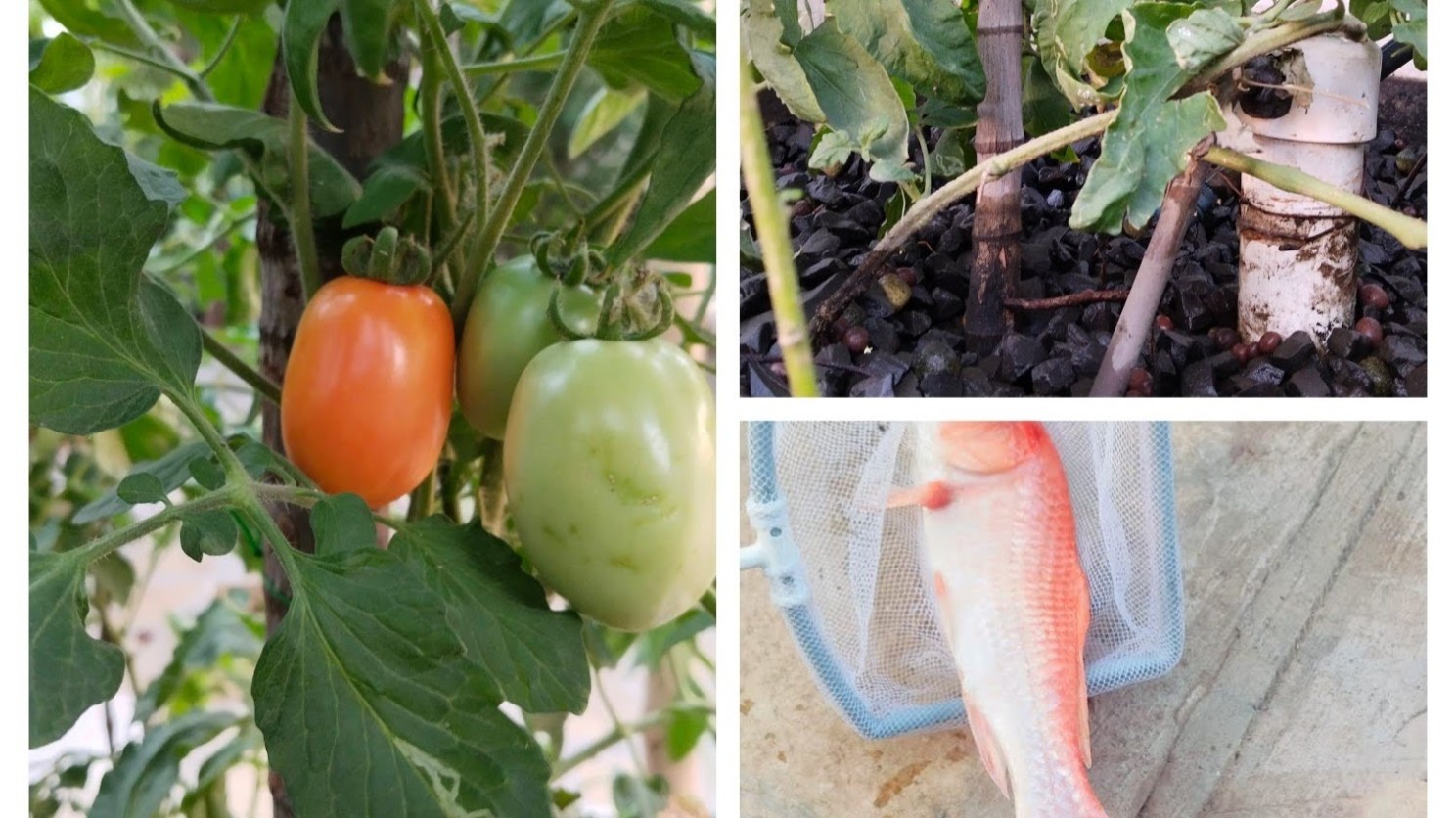
Based in Pune, I had the opportunity to design and build my own aquaponics setup. Our first system came together in 2023, starting modestly with tomatoes and chilies. Unsure about handling tilapia at the time, we opted for koi fish to get things running. Thanks to a fair bit of beginner’s luck, we managed a respectable harvest within the first six months.
Of course, we made our share of rookie mistakes along the way—but each one offered valuable lessons. The system underwent a major overhaul in early 2024, and now, as of June 2025, we’ve shut it down temporarily to make way for a more refined version. The next iteration will be leaner, more efficient, and this time, we’re planning to grow jalapeños. I’m also considering a switch to tilapia, availability permitting.
As this was our first attempt, we were working within a tight budget and opted to use construction-grade stone aggregates as our grow media. However, due to their inherently alkaline pH, nutrient flow was significantly impacted. Despite maintaining an adequate fish population, nitrate and nitrite levels remained unexpectedly low. A substantial amount of ammonia was required to buffer the alkalinity, which further complicated system stability. This challenge ultimately contributed to our decision to dismantle the setup and consider replacing the grow media with LECA or hydrotons.

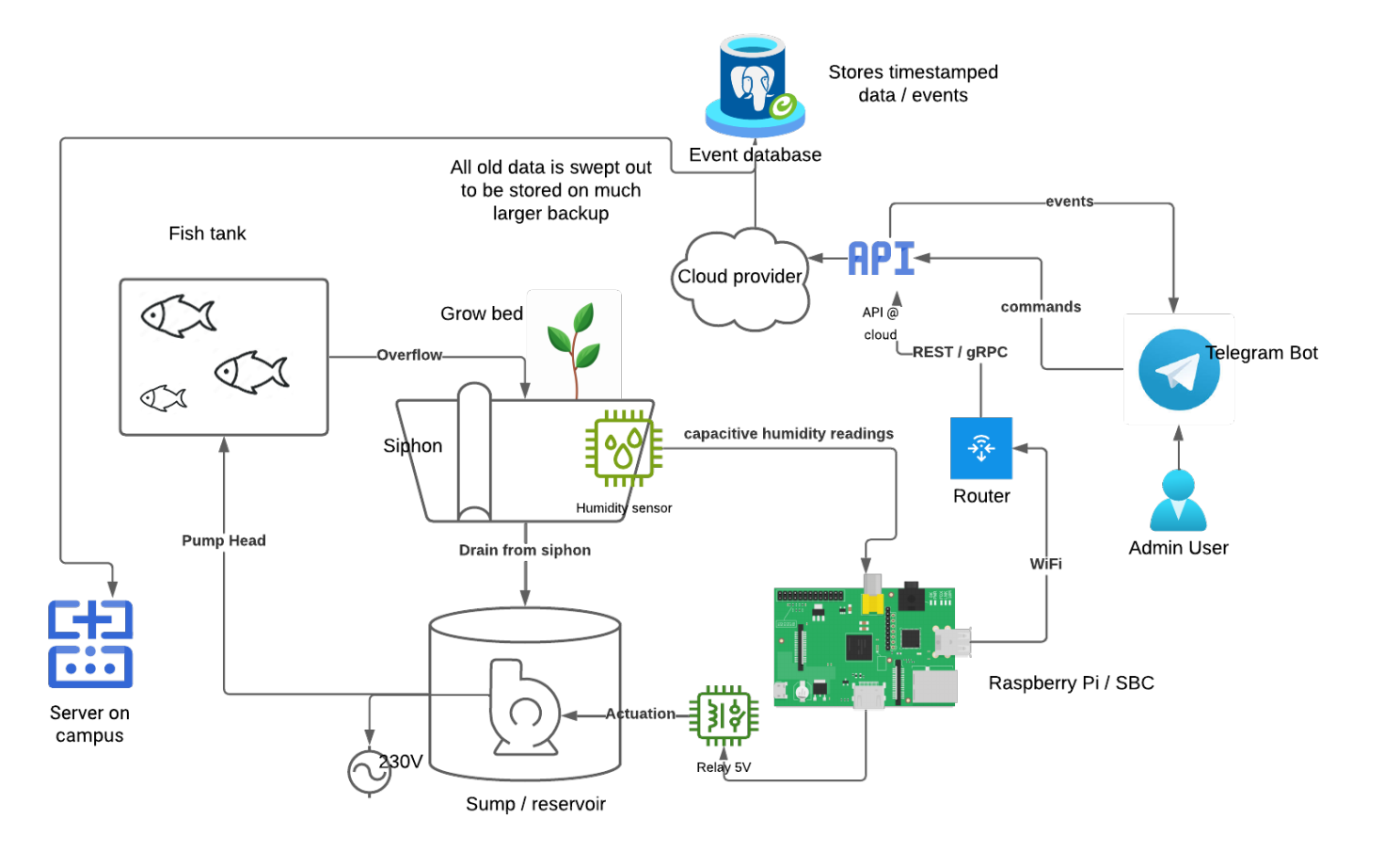
CHOP-I system instead of simple barrel-ponics
Constant-height, single-pump (CHOP) systems offer a more stable and fish-friendly environment, as the water level in the fish tank remains consistent throughout the ebb-and-flow cycles. Compared to CHOP-II configurations, these systems are generally more energy-efficient due to the reduced pumping requirements. However, because water is gravity-fed into the grow bed, the inlet pressure is lower—making the design of the bell siphon even more critical. In particular, achieving reliable vacuum break and consistent siphon operation can be challenging in deeper grow beds, where vacuum lock issues are more likely to occur.

Moisture driven pump control
One of the key upgrades this time will be in automation. Instead of relying on time-based motor actuation, the new system will use moisture sensors to control the pump. The moisture content in the grow media will act as the primary trigger for initiating irrigation cycles—ensuring more responsive and water-efficient operation.
✅ Conclusion
A well-designed bell siphon is more than just a drain mechanism—it’s a cornerstone of a stable and efficient aquaponics system. When combined with smart automation and environmental sensing, it enables precise control over moisture cycles, enhances plant health, and reduces system failures. As aquaponics continues to evolve, mastering these foundational elements ensures your system remains productive, low-maintenance, and scalable for the future.
The process of dismantling the existing system and constructing the new, improved setup is expected to take approximately three months. In a future blog post, I look forward to sharing detailed insights from this rebuild. I also plan to delve into a related topic that often goes overlooked—the critical role of pH in nutrient uptake within aquaponic systems.